
Electric trucks and zero-emission zones: is your logistics future-proof?
The logistics sector is undergoing major changes. Zero-emission zones, stricter environmental regulations, and increasing societal pressure to go green are pushing companies to rethink their transport strategies. The shift to electric trucks and alternative fuels is no longer a question of if, but when. Businesses that invest in sustainable logistics today are building their future and strengthening their position in an increasingly competitive market. Let’s take a closer look at the developments.
What are zero-emission zones?
Zero-emission zones (ZEZ) are urban areas where, starting in 2025, only emission-free vehicles will be allowed to drive. The goal? Cleaner air and lower CO₂ emissions. By 2030, all Dutch city centers must be completely emission-free. This means diesel and petrol trucks will no longer be permitted. Time to plan ahead.
What does this mean for logistics?
The implementation of zero-emission zones will have a direct impact on the daily operations of logistics companies:
- Transition to zero-emission vehicles: diesel and petrol trucks will soon be banned from urban areas.
- Sustainable investments are rewarded: subsidies and tax benefits are available for electric and hydrogen-powered trucks.
- Changing infrastructure: more fast-charging stations and hydrogen refueling points are needed.
- Shifting costs: electric trucks have a higher purchase price, but lower maintenance and energy costs.
Electric trucks: the future of urban distribution
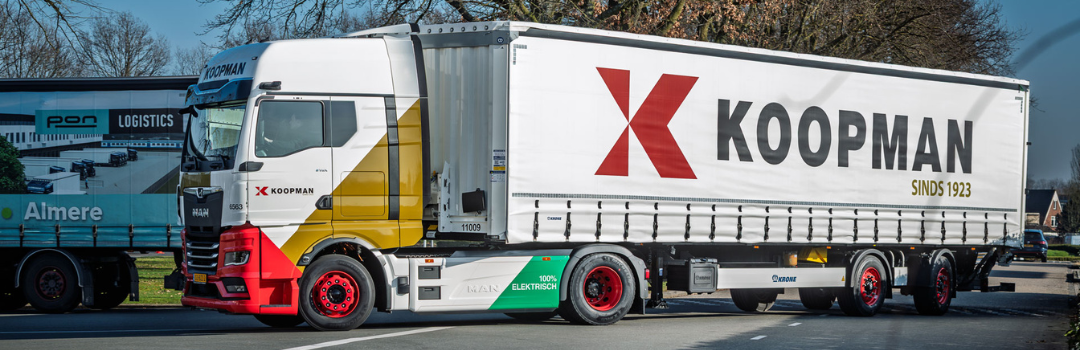
More and more companies are switching to electric transport. Pon Logistics is prepared and, together with Koopman Logistics, has introduced the MAN eTGX: a fully electric tractor unit. This truck will be used to distribute parts and accessories from Leusden, covering 140,000 kilometers per year. It’s a major step toward zero-emission logistics and proof that sustainability can be scaled.
The benefits of electric transport
Electric trucks offer key advantages for logistics companies:
- Zero emissions: no CO₂ or nitrogen emissions, perfect for low-emission zones.
- Quieter deliveries: ideal for residential areas and out-of-hours deliveries.
- Lower operational costs: reduced maintenance and lower energy expenses.
- Access to zero-emission zones: no restrictions for city deliveries.
The challenges of electric transport
That said, electric transport also comes with its challenges:
- Limited range: not always suitable for long-distance routes.
- Longer charging times: charging takes longer than refueling a diesel truck.
- Insufficient charging infrastructure: especially along highways, fast chargers are still scarce.
- Higher upfront costs: while the initial investment is high, subsidies and lower running costs help offset it.
Although these challenges remain, solutions are evolving rapidly. Batteries are becoming more powerful, charging times are decreasing, and charging networks are expanding. Smart route planning and working with an experienced logistics partner can make all the difference. Pon Logistics continues to lead by testing and implementing new sustainable innovations.
Alternative fuels as a transitional solution
Electric trucks are not always practical for long-distance transport yet. That’s why other sustainable fuels, such as hydrogen and HVO100, are being explored. Hydrogen offers a longer range and quick refueling, while biodiesel like HVO100 can reduce emissions from existing diesel engines without the need for major vehicle investments. These fuels are seen as interim solutions until electric and hydrogen technologies are more widely developed and adopted.
What does this mean for you?
Pon Logistics is actively responding to these developments by investing in electric trucks and smart logistics solutions. The introduction of the MAN eTGX is a tangible example of this. But it’s not just about the vehicles: charging infrastructure, route optimization, and sustainable distribution hubs are becoming increasingly important.
The future is clear: electric trucks will soon be a common sight on our roads. For long-distance transport, hydrogen and HVO100 remain strong alternatives. Companies that invest in these technologies now will be ahead of the game.
Logistics is becoming more sustainable and Pon Logistics continues to innovate to lead the way.
Curious how your business can adapt to the new reality of zero-emission zones and sustainable transport? We’re happy to think along with you. Get in touch and discover how we can future-proof your logistics.

