
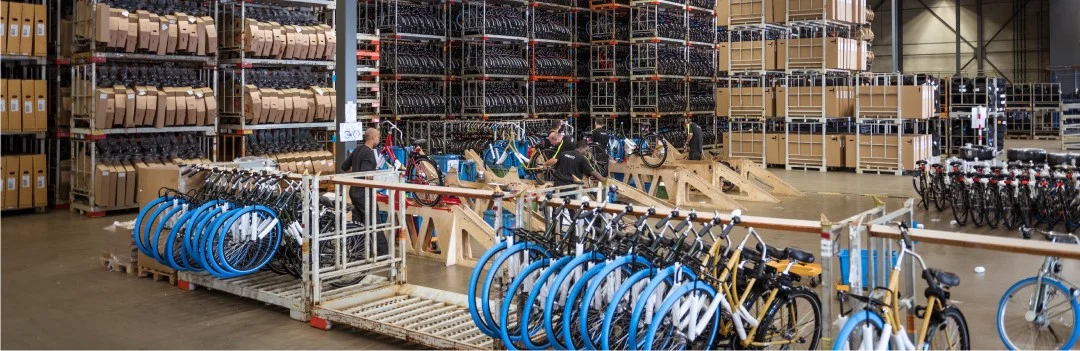
8 tips for better warehouse management
Keeping a warehouse organized may seem easy, but it can be very challenging! And the larger the company becomes, the more complicated managing the warehouse is. If you’re not careful, your warehouse can quickly turn into a messy and cluttered space, causing you to waste a lot of time searching, walking, and organizing. To help you maintain order amidst the chaos, here are eight tips for better warehouse management.
1. Choose a strategy
Every business, and especially each size of business, requires a different strategy. This applies to the warehouse as well. First, make clear what needs to be done. How many orders are there per day, how many people do you have, how large are the products that need to be picked, are they boxes or individual units? Smaller companies can manage by collecting all orders one by one, whereas larger companies or large orders might benefit from different order picking techniques. Want to learn more about the most popular order picking techniques? Read this blog.
2. Think in zones
Dividing the warehouse into zones prevents people from getting in each other’s way. You can create separate zones for transportation, shipping, receiving, and storage. Fresh products that need to be kept cool, as well as small, loose parts, should also have their own zones.
3. Design a smart route
Ensure that products that are often ordered are easy to access. Place your bestsellers at the front or cluster them in a separate corner of the warehouse. By placing fast-moving items close to the packaging or shipping area, you save a lot of time. For more tips on smart warehouse layout, read this blog.
4. Set up efficiently
You want to make the most of your warehouse space. If you have a lot of vertical space, use it. Store small items in stackable bins. By using dividers in the bins, you can fit more items in each one.
5. Automate
Even with just a few dozen orders a day, automation can yield significant savings in time and money. Consider a packaging machine, but especially an automated inventory system.
6. Reduce movements
Efficient routes for order picking and clustering orders ensure that movements within the warehouse are minimized and that people do not get in each other’s way or path. This requires smart warehouse layout, correct product identification, and an automated system.
7. Limit inventory
Naturally, you don’t want to run out during orders, but having too much inventory is also detrimental. Particularly with seasonal products or fashion-prone items, it is essential to keep inventory limited. Try to forecast sales, check inventory regularly, and adjust it as needed.
8. Outsource
To ensure optimal warehouse management and to benefit from expertise and the latest techniques, outsource your warehousing to a specialist. This provides an easily scalable solution that grows with you.

